
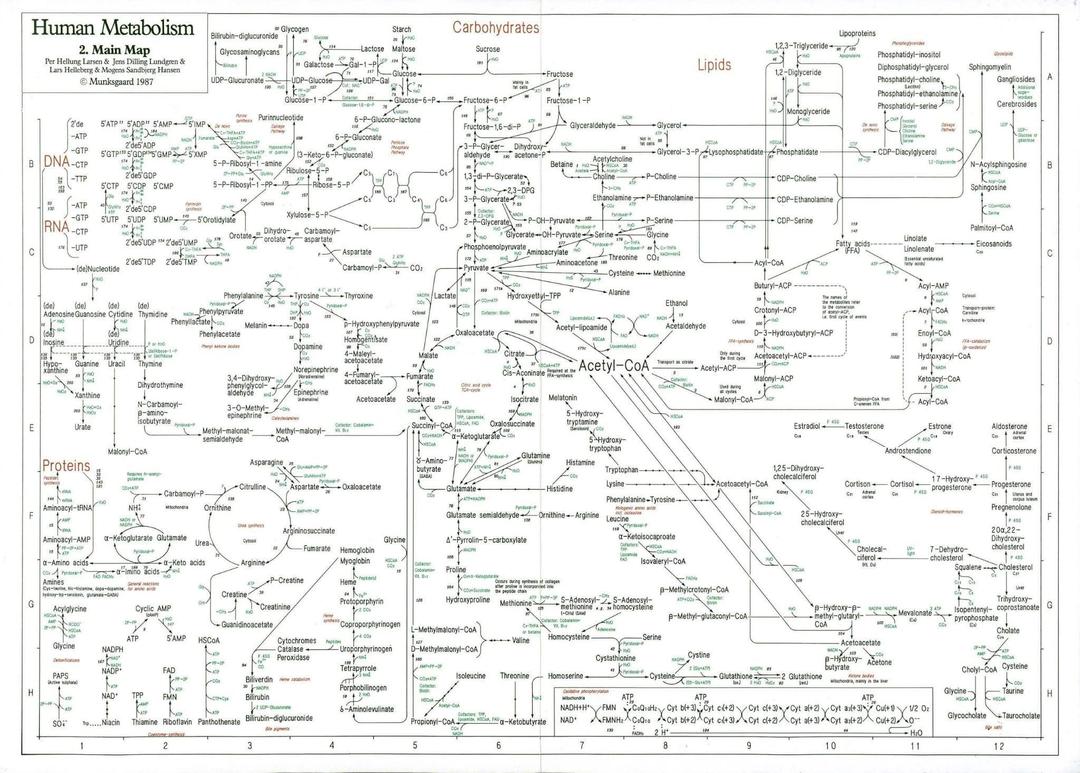
There is a strong consensus that mental and neurological diseases present an alteration in the energy metabolism of biomolecules such as carbohydrates, lipids and amino acids. Scientific evidence has shown that glucose metabolism is altered in the prefrontal cortex and hippocampus of depressed patients and in animal models in rodents, which can be prevented by treatment with classic antidepressant drugs. It is noteworthy that these neuroanatomical regions impacted in the etiology of depression present a large glycolytic flux. Furthermore, it is well established that in diabetic patients who do not present glycemic control there is a high prevalence of depression. In contrast, depression is considered an important risk factor for the development of metabolic syndrome. Therefore, the understanding of how alterations in glycemic homeostasis impact the etiology and development of depression is still not fully understood.
The literature reports that depressed patients have higher basal fasting glucose levels, greater cumulative responses to glucose in the glucose tolerance test, and greater cumulative responses to insulin (Winokur et al., 1988). Furthermore, a study reported that in depressed patients, decreased glucose uptake and utilization in the glucose tolerance test is related to symptoms of motor retardation, social isolation, and affective blunting (Heninger et al., 1975). In fact, glucose can be metabolized throughout the ten steps of glycolysis, generating 2 pyruvate, 2 NADHs, and 2 ATPs molecules in this process. Pyruvate under aerobic conditions is directed to the mitochondria, where it is completely oxidized in the Krebs cycle. Under anaerobic conditions, pyruvate can be oxidized to lactate in the cell cytosol. Lactate levels are negatively correlated with the severity of depression (PEREIRA et al., 2022) and a series of recent scientific evidence has demonstrated that peripheral administration of L-Lactate exerts an antidepressant effect in patients and animal models (CARRARD et al., 2018, 2021, KARNIB et al., 2019; LIANG et al., 2024). In this sense, our experimental group has focused efforts on understanding the effects of Lactate and its molecular mechanisms that can exert antidepressant effects.
Furthermore, another intermediate of the glycolytic pathway called methylglyoxal (synthesized through the chemical reaction catalyzed by the glycolytic enzyme and cytosolic triose phosphate isomerase) has also been widely studied in the etiology and treatment of stress-related diseases. Evidence shows that it appears to generate an anxiolytic effect in low concentrations and at the same time generate a depressive-like and mnemonic effect in high concentrations. Thus, the project also aims to better understand how this molecule exerts its behavioral effects and how the metabolism of this molecule is involved in the management of stress-related diseases.
Interestingly, alpha-ketoglutarate is a key intermediate in the tricarboxylic acid cycle (also known as the Krebs cycle), being the product of the decarboxylation of oxalosuccinate and the immediate precursor of succinyl-CoA. In addition, alpha-ketoglutarate also serves as a precursor in the synthesis of the amino acid glutamate. Alpha-ketoglutarate is a molecule synthesized as a result of physical exercise and released into the bloodstream. In this sense, 40 minutes of resistance or voluntary exercise in mice induces an increase in serum levels of alpha-ketoglutarate (Yuan et al., 2020). In fact, the literature has reported that this energy metabolism molecule produces an antidepressant effect and increases hippocampal BDNF levels. The mechanisms by which alpha-ketoglutarate exerts such effects are not yet fully understood and the project also seeks to understand the same.
Finally, for over 15 years, Dr. Cunha has been reporting the antidepressant effect of creatine, and recent clinical studies are confirming this effect. Creatine is a molecule that can be phosphorylated to phosphocreatine in a chemical reaction catalyzed by the enzyme creatine kinase in the mitochondria using newly synthesized ATP molecules. When it exits through membrane pores as phosphocreatine and is reconverted to creatine in the cytosol, it supports work processes with ATP molecules. This energetic coupling assists in the functional process, mainly neuronal. Therefore, Dr. Cunha has extensively reported the antidepressant effect of acute or repeated oral administration of creatine in different animal models and the modulation of receptors and intracellular signaling pathways involved. However, a deeper understanding of these effects is necessary in more in-depth and critical experimental models.
In this sense, the project seeks, through behavioral, neurochemical and bioinformatic analysis tools, to determine whether the metabolism of the energy intermediates Lactate, Methylglyoxal, alpha-ketoglutarate and Creatine is involved in the aetiology, development and management of mental and neurological diseases, such as depression. The effect of these energy compounds could indicate the development of new treatments for the management of stress-related diseases based on the modulation of energy metabolism.